A cross-disciplinary support concept
A brand, character system and mobile learning experience developed as one connected design language.
 MuddbbitCase 01 · ← IRIS REN
Portfolio case study · 2019
Parenting Support App &
Learning Experience Concept
Translating emotional and behavioural challenges in Chinese family education into a character-led learning system, ceramic objects and a mobile app.
View the case study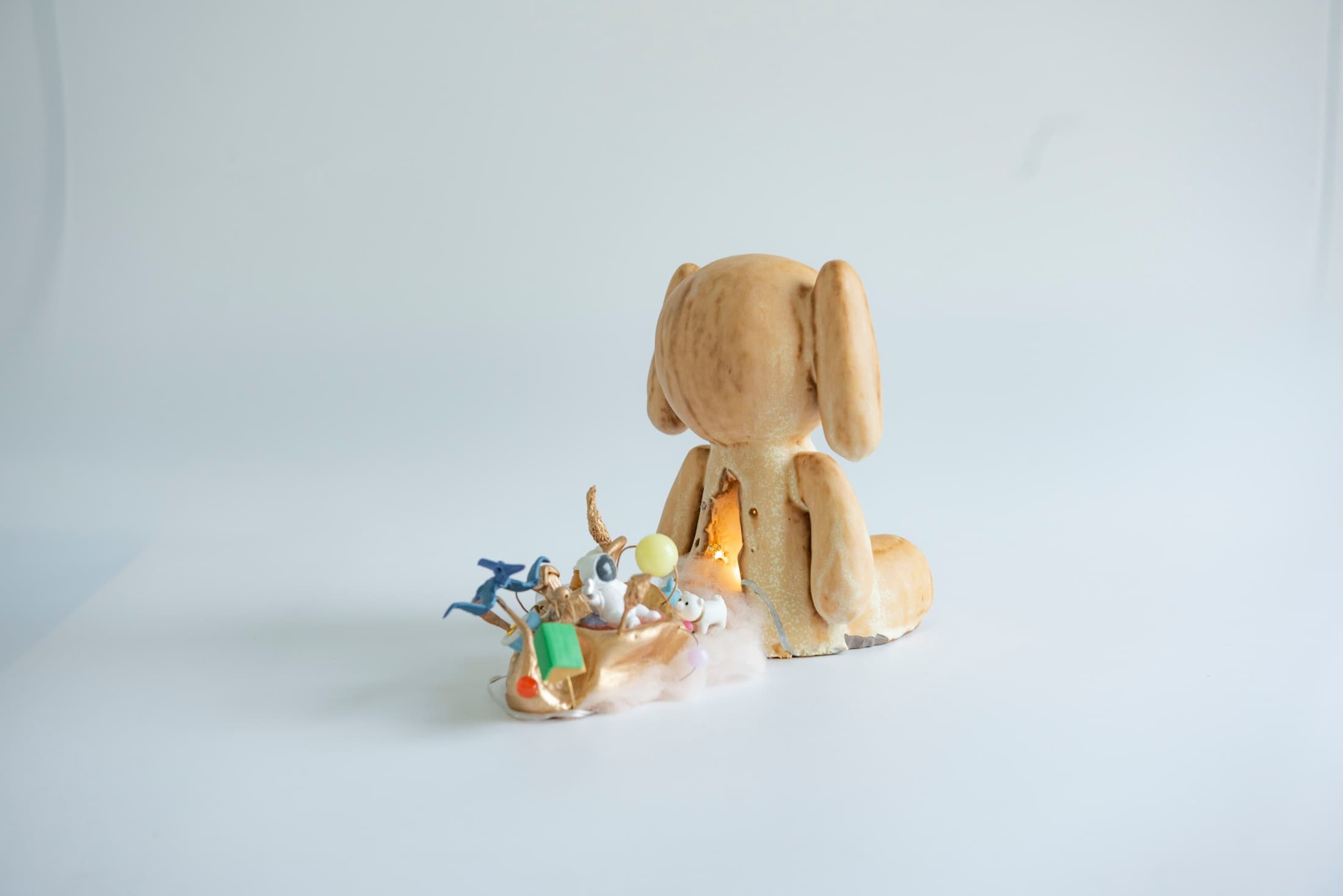 Character 01 / Expression
Muddbbit explores how parents might move beyond visible behaviour to better understand the emotional and family contexts beneath it.
Developed independently from initial research to final presentation, the concept combines a mobile learning experience with a character-led identity and a family of hand-built ceramic rabbits. Each medium does a different job: research frames the subject, objects make it tangible, and the interface makes it navigable.
A brand, character system and mobile learning experience developed as one connected design language.
Initially conceived for Chinese parents aged 25-35 who felt unsure how to interpret recurring emotional or behavioural challenges.
To reframe difficult behaviour as a prompt for context, reflection and learning, not simply a problem to suppress.
When information feels abstract, a character can hold attention. When a subject feels judgemental, a story can create distance. When a system feels complex, structure can make the first step possible.
How might a learning experience help parents look beyond visible behaviour and better understand the emotional contexts behind it?
Emotional and behavioural challenges resist neat labels. The concept needed enough structure to guide without pretending to diagnose.
The project began from tensions I observed in Chinese family education discourse around achievement, obedience, care and independence.
Parenting guidance can feel clinical or judgemental. Muddbbit needed to feel young and inviting without becoming childish.
Research, physical characters and digital navigation had to read as one system rather than three adjacent outcomes.
I led every design decision and produced the project end to end.
The desk research looked for patterns behind the behaviours that parents often describe as confusing or difficult.
Reference reading included parenting theory, child-development material and public discussion available to me in 2019. Rather than treating the resulting themes as diagnoses, I used them as content lenses: a way to connect a visible behaviour with possible emotional, relational or environmental context.
Navigation lens
Difficulty recognising, naming or communicating feelings. The design response makes an invisible inner world physically present.
Object translation
A quiet figure faces an accumulation of tiny objects, a private universe that is full, vivid and hard to articulate.
These clusters organised the concept; they were not intended as clinical diagnoses.
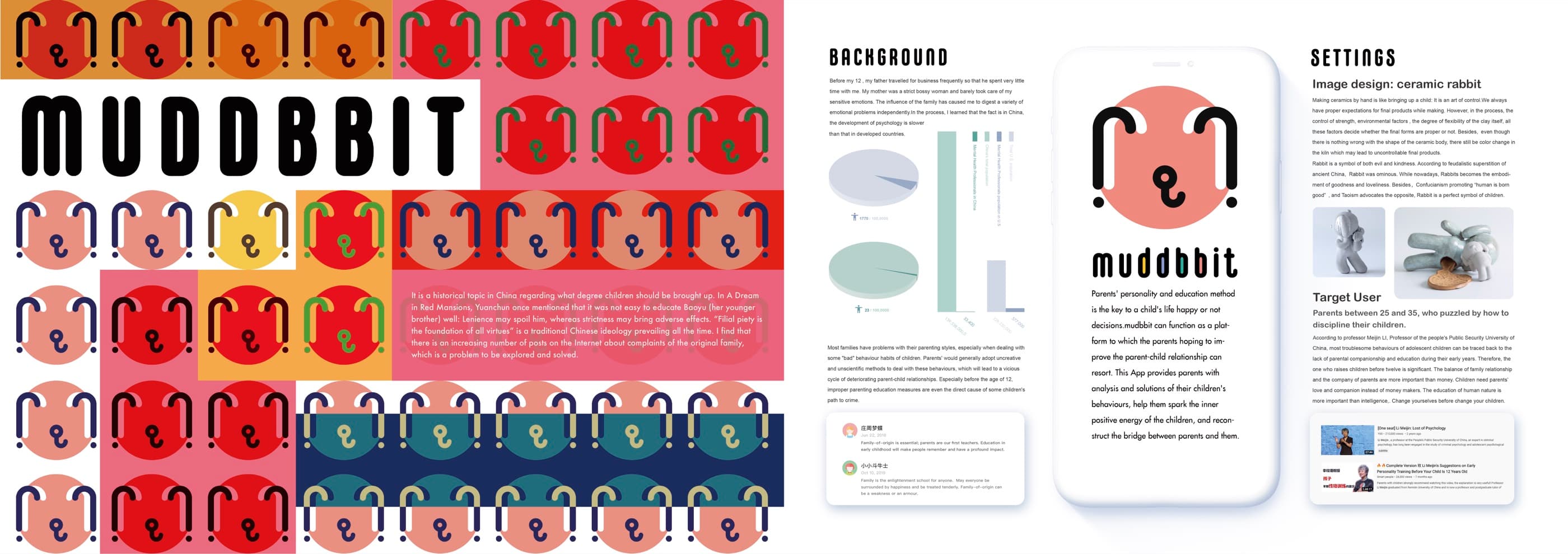
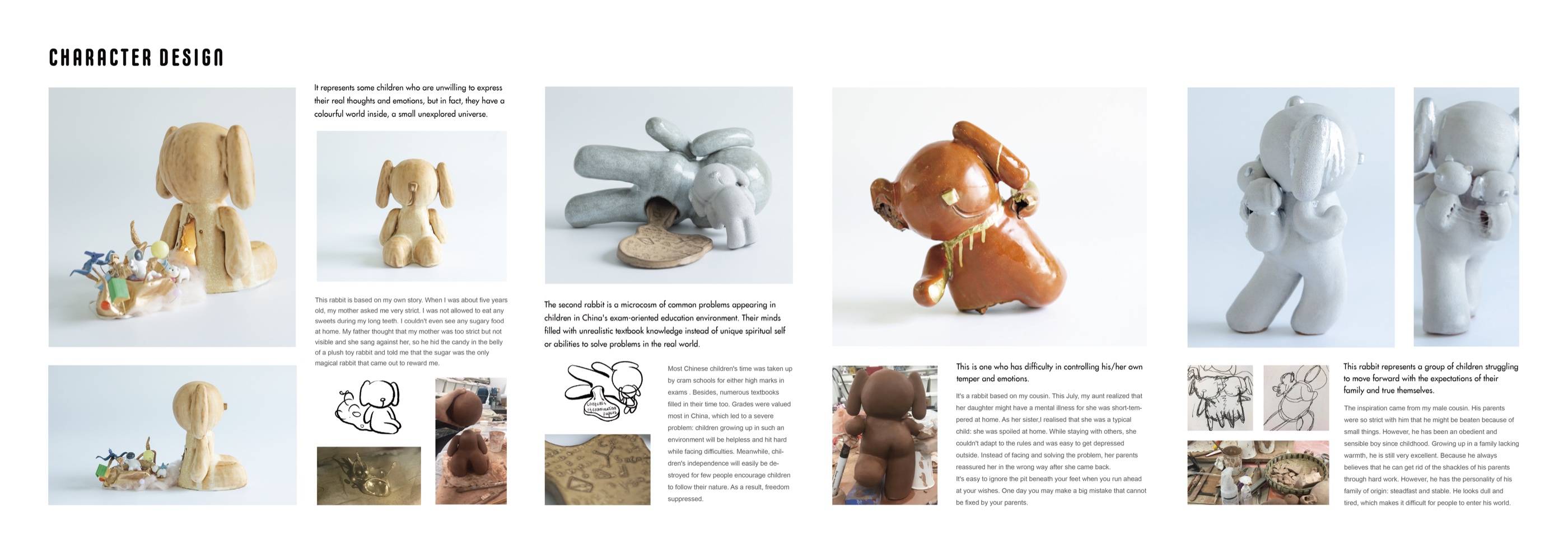
Ceramic making became both medium and metaphor. The maker can control preparation, pressure and form, yet firing always introduces uncertainty. Parenting carries a similar tension between intention and outcome.
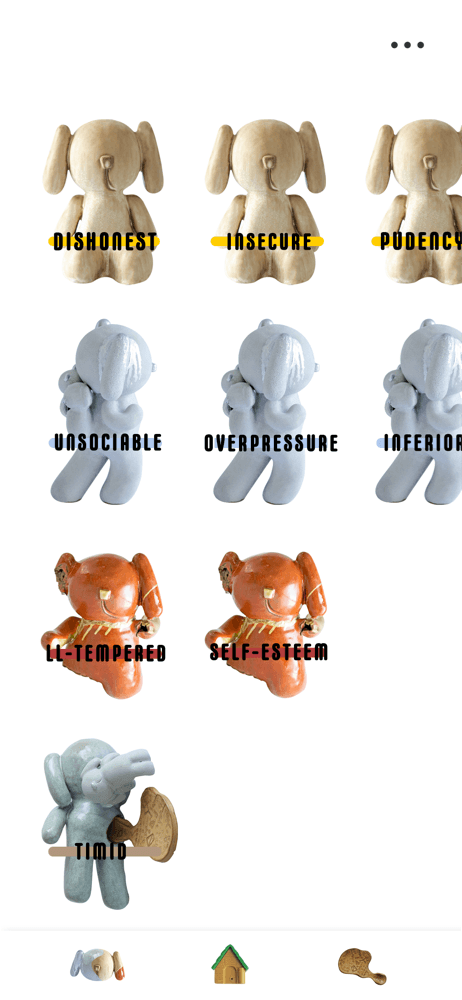
The four objects were not decorative mascots added after the fact. Their posture, weight, surface and attached forms became the emotional logic of the digital categories.
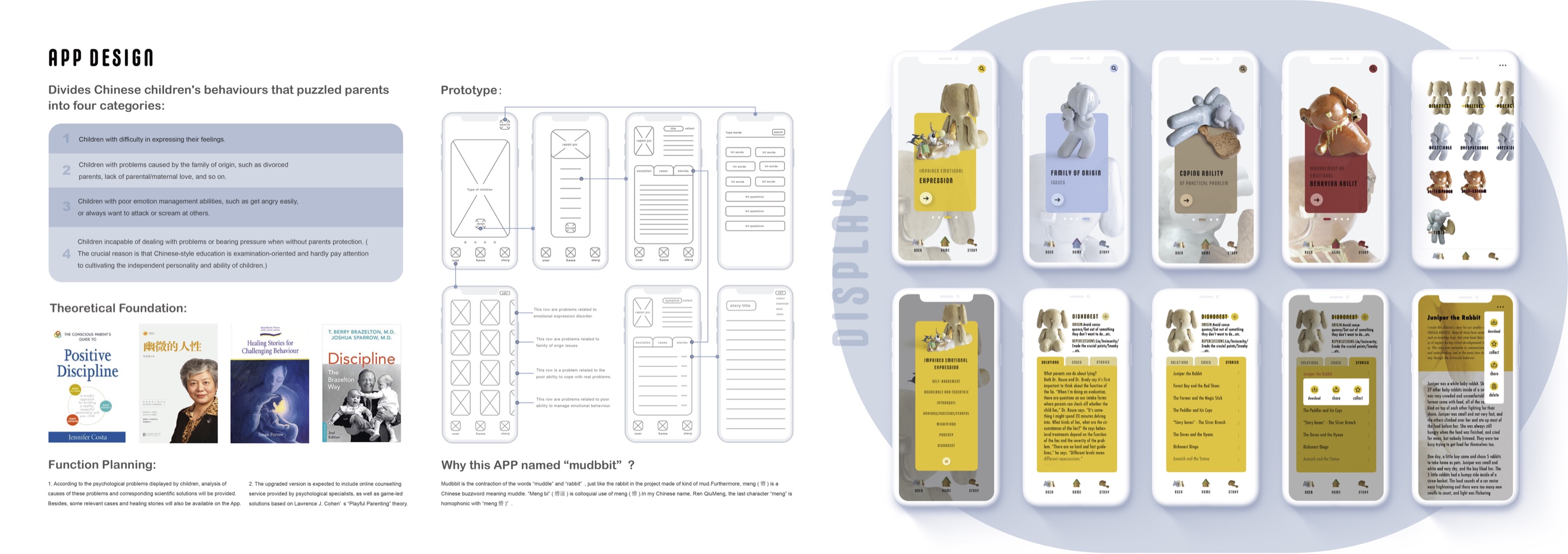
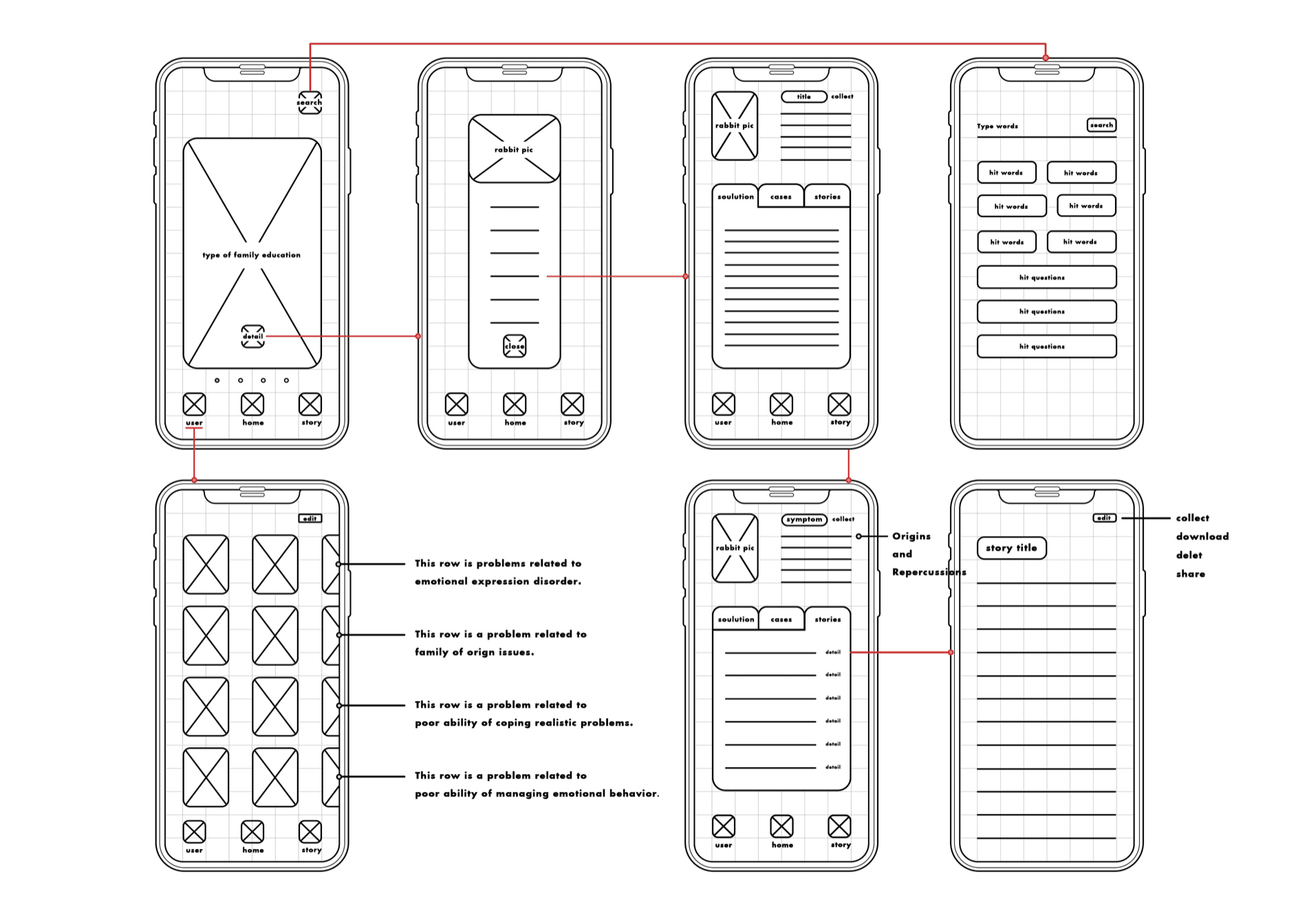
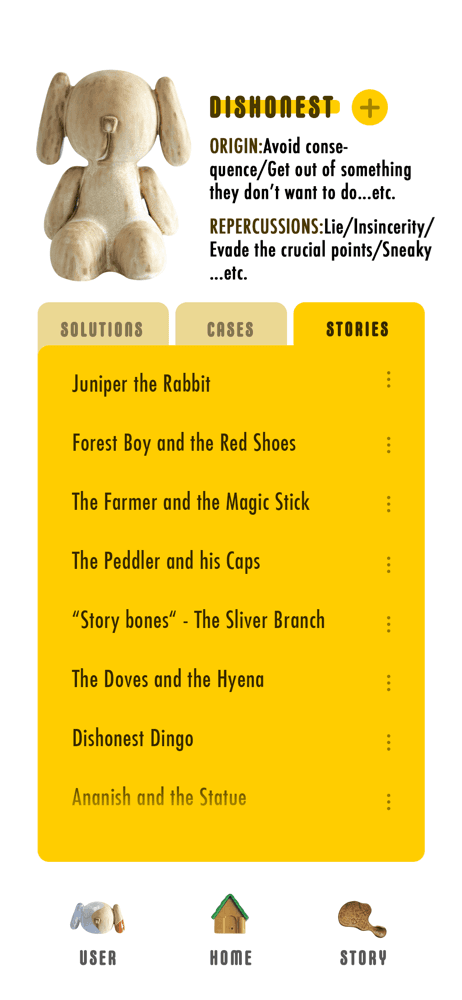
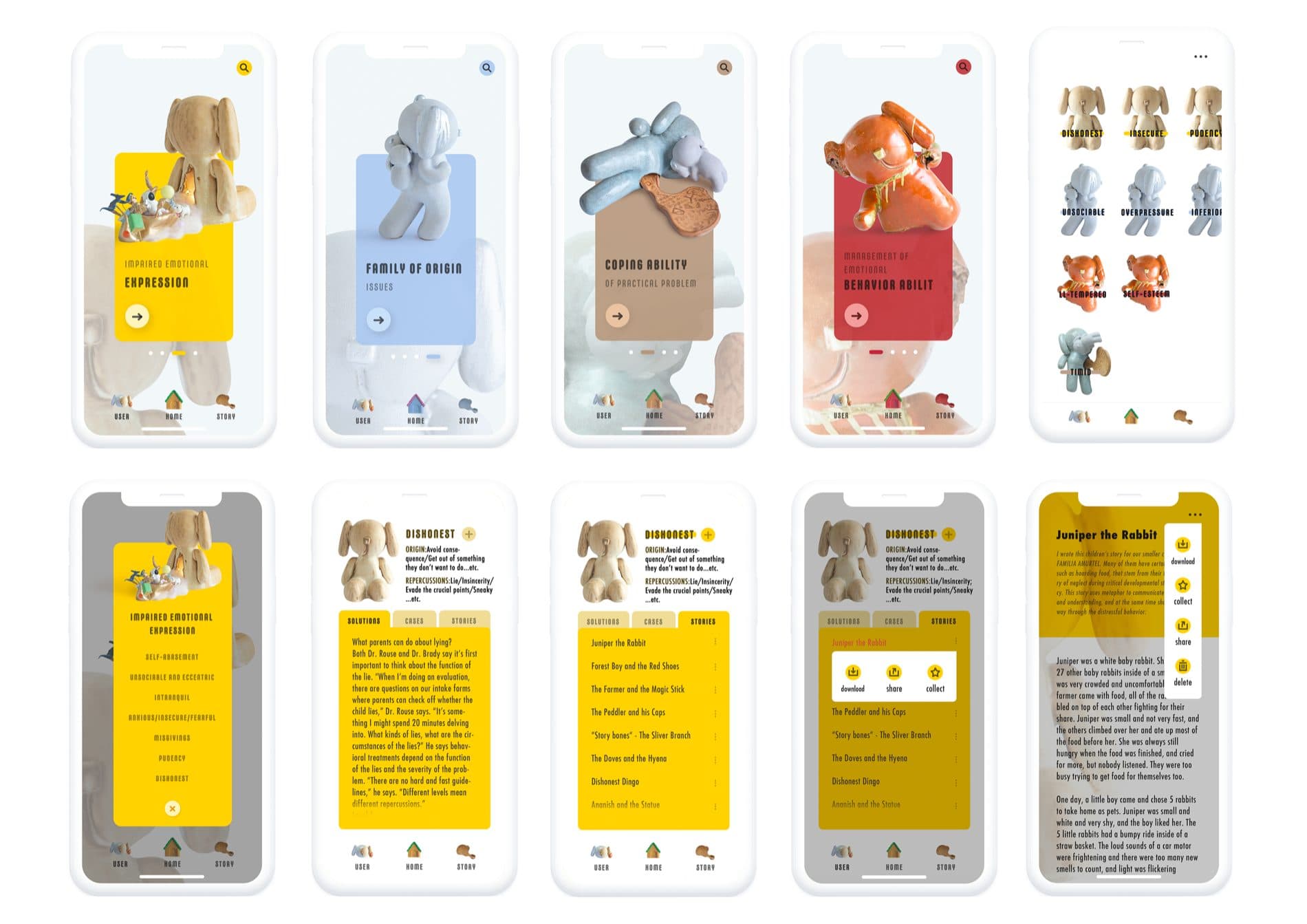
The app moves from a broad behaviour cluster to a specific concern, then offers possible context through three content modes.
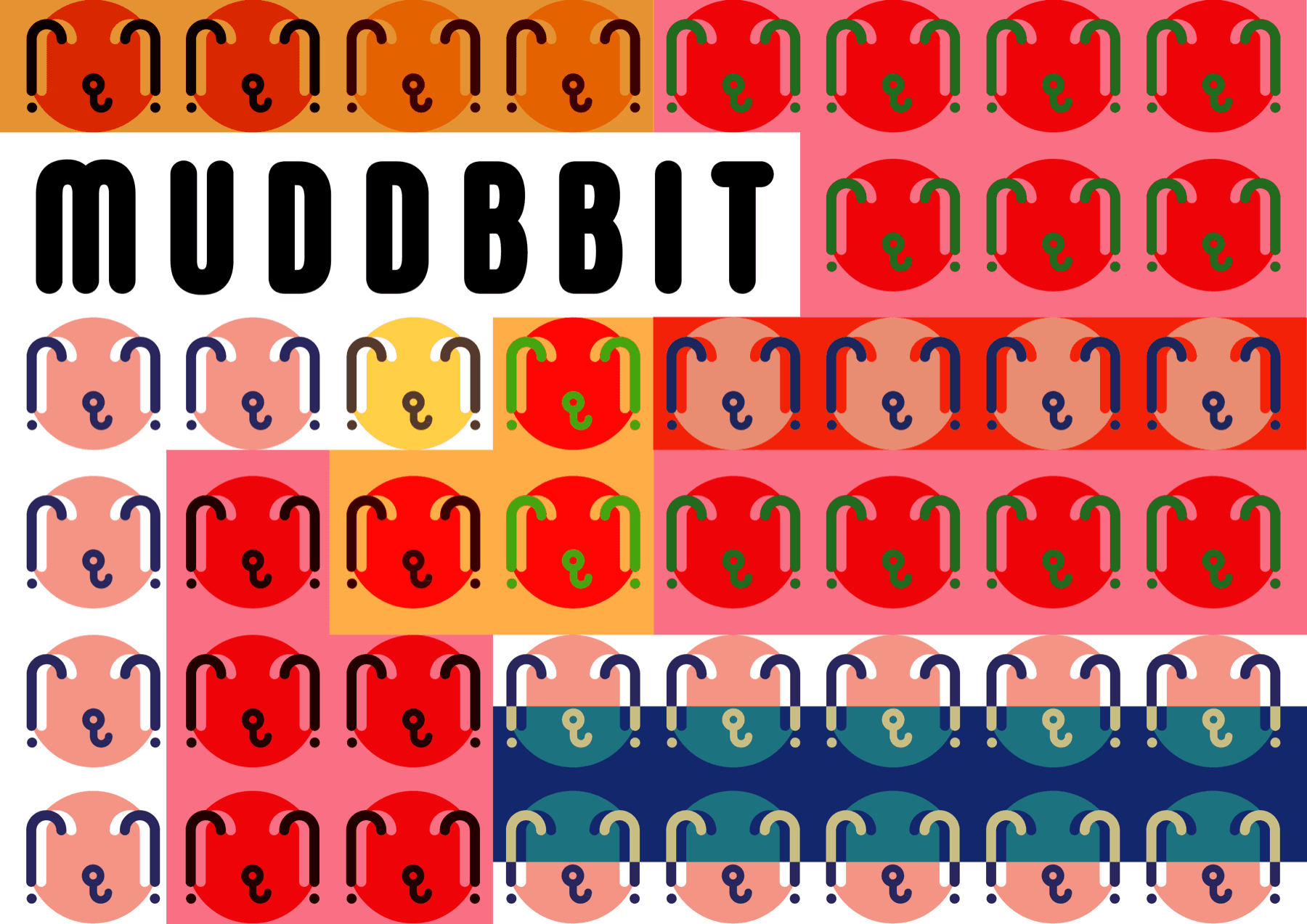
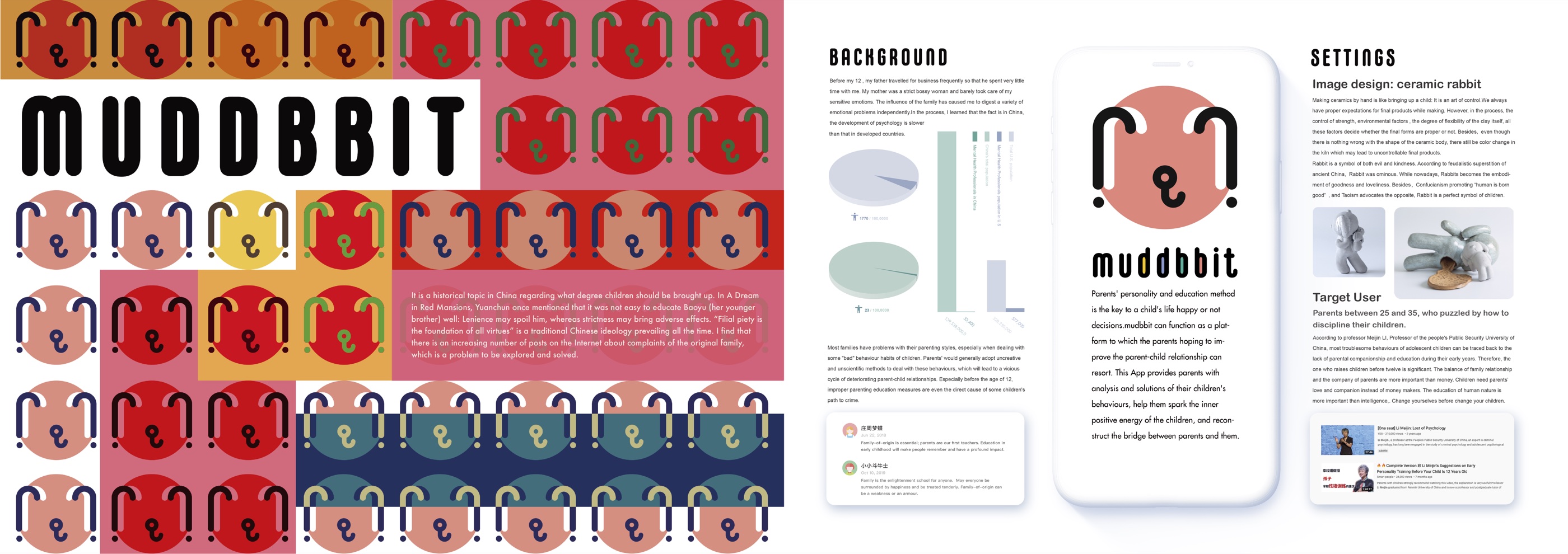
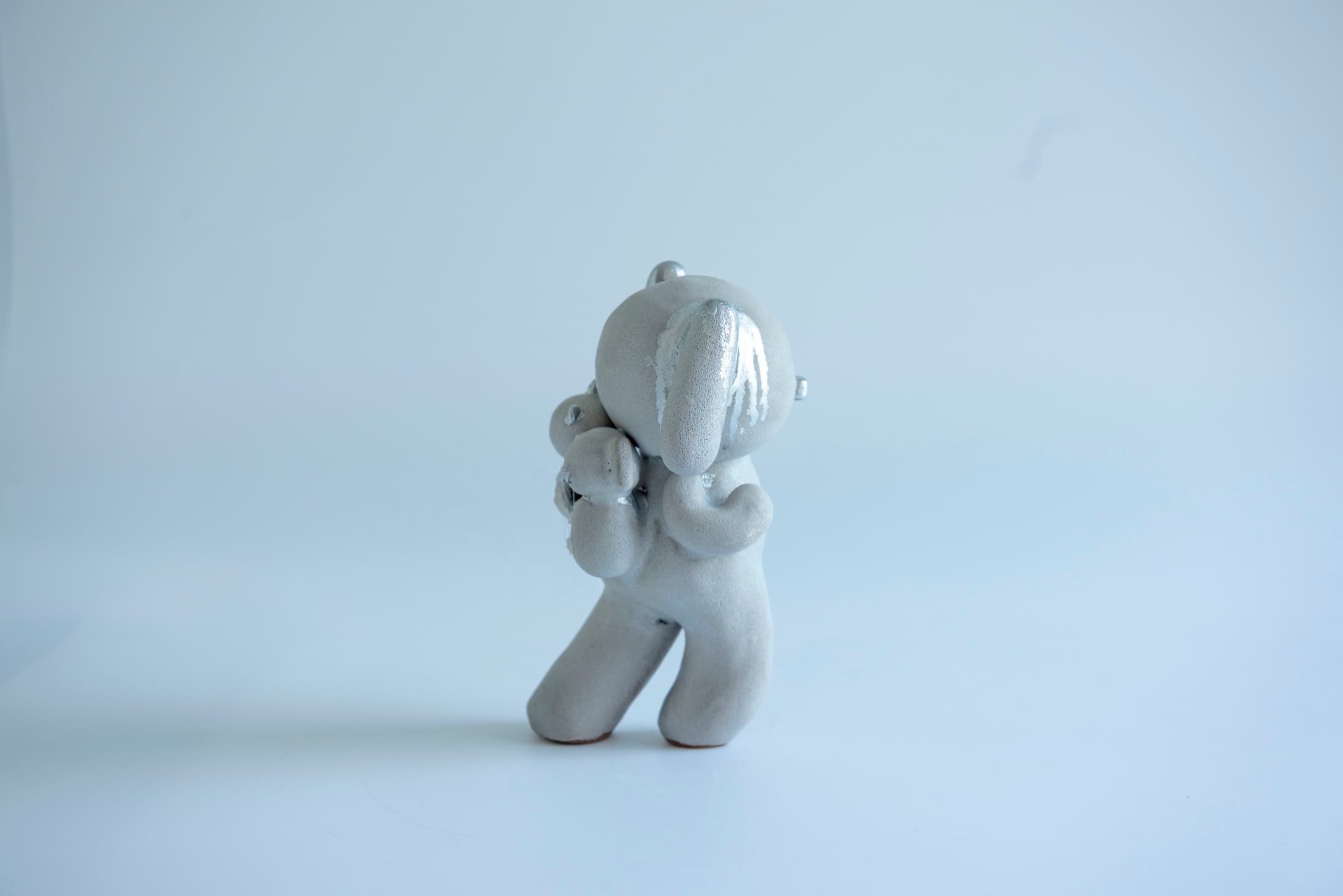
The logo compresses the rabbit into a circular face. Its nose reads like a question mark, a small cue for curiosity rather than judgement. Repeated as a pattern, it shifts between playful identity and restless visual noise.
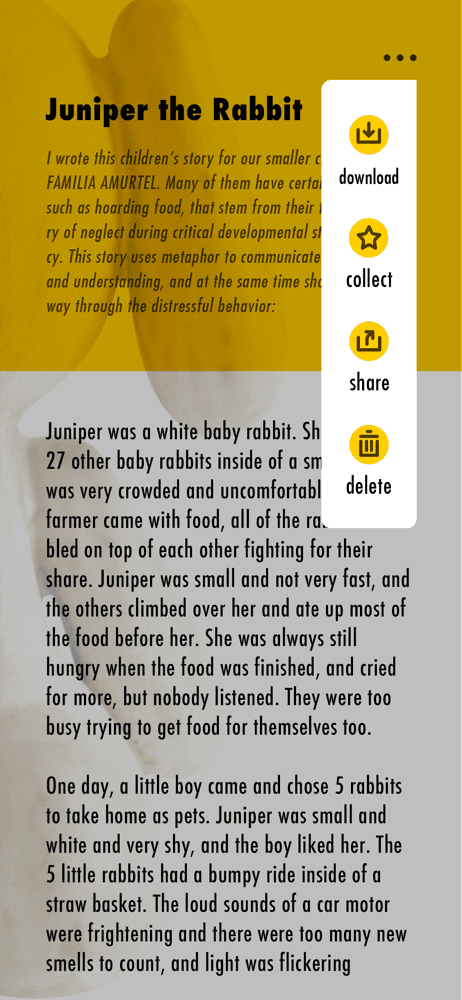
The final concept uses colour-coded entry points, character-led navigation and three reading modes: guidance, cases and stories. This makes dense material easier to approach.
Scroll horizontally to explore the screens →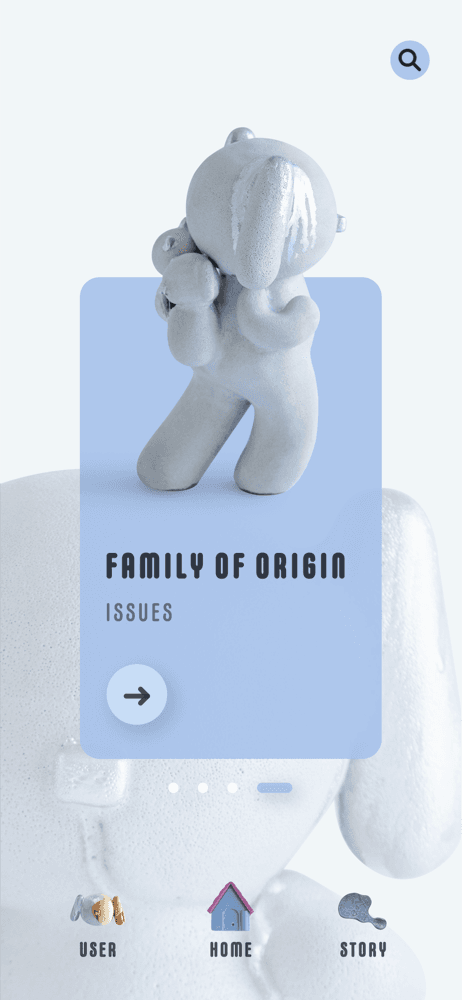
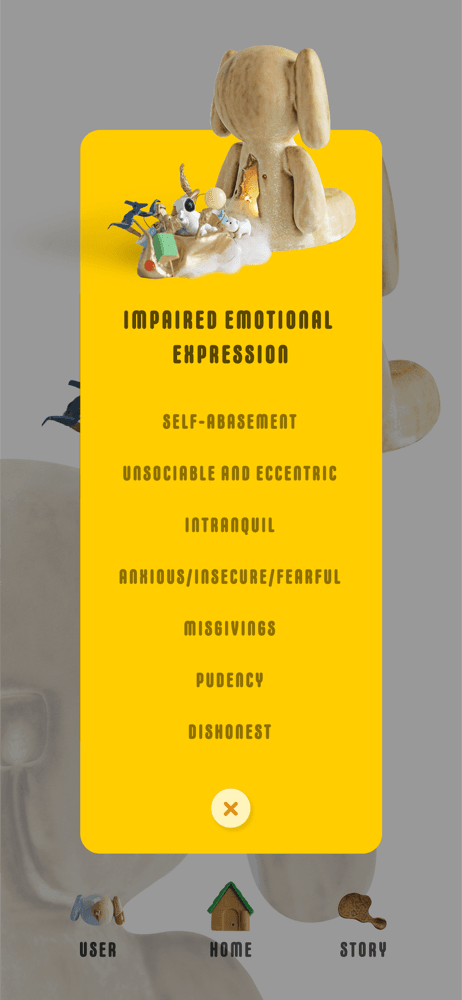
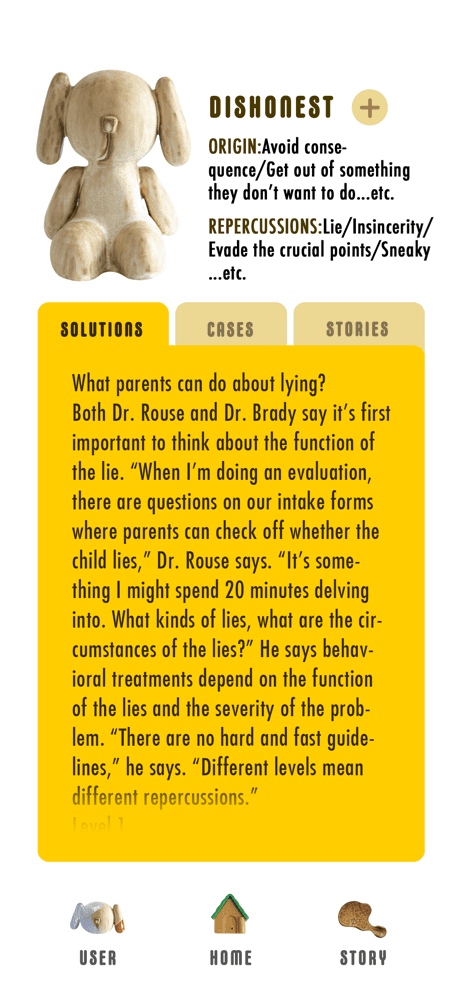
Muddbbit shows my ability to move from a broad social question into a coherent brand, physical character family, content model and interface. It also records an independent process in which research, form and storytelling were developed together rather than sequentially.
Muddbbit remains valuable to me not because every assumption still holds, but because it shows how I learned to connect research, material, narrative and interface, and where I would ask better questions today.